The short version: two offices, two steps, two possible destinations
If a loved one's ashes are already sitting in a columbarium niche or a garden-style memorial plot and you'd now like to move them somewhere else, the journey has two halves that most guides skip over — and a genuine choice in the second half that most guides don't even mention.
1. Get the urn released by the operator that holds it. This part has no single national process — it depends entirely on the operator, and applies whichever destination you're moving to. 2. Choose and book the new disposition — inland ash scattering with NEA, or a sea burial. These are genuinely different processes with different providers, and it's worth knowing both exist before you commit to one.
This guide covers ashes that were cremated and are currently stored in a niche or garden plot. If you're dealing with a physical burial (a body in the ground), that's a different process involving an exhumation permit, not this one. For the sea burial side on its own, see Sea Burial Singapore. For the inland scattering side on its own, see Ash Scattering Singapore. For niche storage in general, see Columbarium Singapore.
Step 1 — Release the ashes from the columbarium
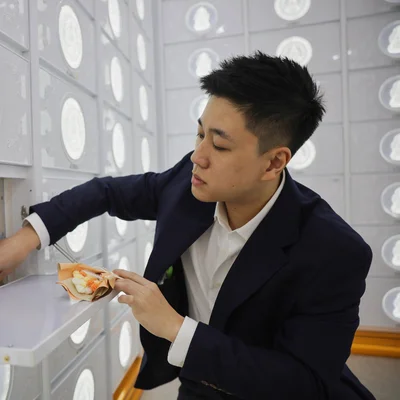
There is no single, nationwide procedure for taking an urn out of a niche. The operator that holds the niche sets the rules, and they genuinely differ.
A government columbarium (Mandai, Choa Chu Kang) handles it one way. A temple, a church, or a private or clan-association columbarium each have their own. Some require a form, an appointment and a signature from the registered next-of-kin, plus a small admin fee. Others are lighter on paperwork. The only reliable way to know is to write in to the specific office that holds the niche and ask.
For a government niche, start with Mandai Columbarium. For a temple or private niche, contact that organisation directly.
💡 Tip
Questions to ask the columbarium so it's one call, not five: • What's the application or form to remove an interred urn? • Is there an admin or withdrawal fee, and how much? • How much notice do you need before collection? • What proof do you require — next-of-kin relationship, the death certificate, the original purchase receipt or niche agreement? • Is the niche surrendered afterward, and is any prepaid amount refundable?
⚠️ Important
Some operators, private Christian columbaria in particular, won't quote any of this over the phone at all. They'll ask the authorised representative to come down in person before they'll discuss cost or paperwork, since it depends on the specific niche and the labour involved. Bring identification and the original niche agreement if you have it, to save a second trip.
⚠️ Important
Decide before you release the ashes: once ashes are scattered inland at an NEA garden, or released to sea, that specific disposition can't be undone. If part of the family may want a fixed place to visit, talk it through first — you can also move only a portion and keep some in a niche or at home.
Choosing where the ashes go next: inland scattering or sea burial
| Inland ash scattering | Sea burial | |
|---|---|---|
| Where | Garden of Peace (Choa Chu Kang) or Garden of Serenity (Mandai North) | Designated area ~2.8km south of Pulau Semakau |
| Cost | S$320, NEA fee | S$350 for one boat (up to 10 family members), S$400 for a second boat |
| Booked through | NEA directly, online or in person | A funeral director, who arranges the boat and NEA approval |
| Can you visit again? | Not a fixed spot — NEA periodically moves the ash soil as lanes fill | No fixed spot — the sea, not a marked location |
| Reversible? | No — closes the door on a future NEA niche for the same person | No — permanent |
Both are genuinely final, and both are administered by different people, which is exactly why families researching this often only find one option and assume it's the only one. If your family's original reason for wanting to move the ashes was simply "somewhere more open, less tied to a fixed lease," it's worth actually weighing both before booking anything, since the emotional register of each is a little different — an inland garden still has a place you can return to, in a general sense; a sea burial doesn't, but carries its own meaning for families who wanted a return to nature over land, or who are honouring a wish the person expressed themselves.
Path A — Inland ash scattering (NEA)
This half is standardised and managed by the National Environment Agency. You can apply online or in person.
Online: log in to the NEA portal with Singpass and go to e-Services → After Death → IAS Services → Application for IAS.
In person: at the Choa Chu Kang Cemetery booking office, weekdays 8.30am to 4.30pm (closed 1pm to 2pm for lunch), or at Mandai Crematorium.
A few practical things families don't expect: bookings are taken on a first-come basis and can't be reserved far in advance, and once you select a slot, payment is due within about 30 minutes or the booking lapses. The fee is S$320 per session. You can pay online or at the office.
Eligibility: the scattering is for Singapore Citizens and Permanent Residents, or foreigners whose immediate next-of-kin are Citizens or PRs. For a non-citizen deceased, the application must be made at the Mandai or Choa Chu Kang booking office rather than online.
Documents NEA requires
Have these ready when you apply:
• Death Certificate • Application for Cremation (for NEA-managed crematoria) or the Cremation Permit (for a private crematorium) • Proof of identity of the next-of-kin or executor of the estate named in that cremation document • A Letter of Authorisation, if the applicant is not the next-of-kin or executor
The ashes must be in fine powder form before scattering. If they haven't been processed, that's done for you at the Choa Chu Kang or Mandai Crematorium, at least an hour before your scattering slot.
The inland scattering day
On the day, bring the urn and head to the ash collection counter with your booking confirmation slip. Staff verify it, process the ashes to fine powder if needed, and hand you a one-time canister (you may use your own). You then scatter the ashes onto the bed of pebbles in a designated lane at the Garden of Peace (Choa Chu Kang) or the Garden of Serenity (Mandai North). You're welcome to water the ashes so they settle into the soil; sprinklers run at the end of the day to help.
The gardens are open 9.00am to 5.30pm daily. Sessions are short and private, but other families may be in adjacent lanes.
The rules at both gardens, which apply to every family regardless of religion:
• Fresh flowers only — no artificial flowers • No joss sticks, incense, or burning of offerings • No food or drinks at the site • No music or amplified sound • Keep gatherings small and quiet
One thing to hold in your heart honestly: inland scattering is not a fixed grave. As the lanes fill over time, NEA periodically moves the ash soil to another part of the garden. It's a return to nature, not a permanent marked spot to visit — which is the very reason some families keep a small portion in a niche or at home.
Path B — Sea burial
If the family decides on sea burial instead of an NEA garden, the process is simpler in one real sense: your funeral director handles both the boat charter and the NEA approval as one coordinated service, rather than you dealing with NEA directly. The urn is still released from the columbarium or garden the same way as Path A — that first step doesn't change.
The honest cost: from S$280 for one boat, carrying up to 10 family members alongside the captain and two funeral operators, or from S$400 total if your group needs a second boat. The boat typically departs from Changi Point Ferry Terminal and travels to the designated scattering area roughly 2.8km south of Pulau Semakau. The whole outing usually takes 2 to 3 hours including travel. Full process, rules, and what the day looks like: Sea Burial Singapore.
⚠️ Important
One real complication worth knowing upfront: if the ashes were originally cremated somewhere other than Mandai — kept at a private columbarium, a temple, or a church — Mandai's crematorium won't re-process them through its own powderization equipment for a sea burial. They cite the risk of cross-contamination between different sources of ashes. That facility is only available to re-grind ashes for inland ash scattering, not for a sea burial send-off. In practice, this means ashes collected from elsewhere for a sea burial may not come back as fine powder — there can be visible bone fragments. Worth preparing the family for this beforehand, since most people assume all cremated remains look the same by the time they're released.
💡 Tip
This is genuinely the situation I'm coordinating for a family right now — moving ashes from a memorial garden niche to a sea burial. If you're facing the same move, I'm happy to walk you through both halves so you're not the one chasing two different offices during an already difficult week. WhatsApp Kenneth at +65 8958 9787.
A gentle note on keeping versus scattering
There's no wrong answer here, only the one that fits your family. Some scatter everything and find peace in the letting go. Some keep a portion — in a niche, a small keepsake urn, or a home altar — so there's still a place to sit with the person. Because scattering at an NEA garden closes the door on a future government niche for the same person, it's worth a quiet family conversation before you go ahead, rather than a decision made alone at a hard moment.
If you'd like a hand coordinating the release with the columbarium and the booking with NEA, Kenneth can manage the whole thing directly — see Funeral Director Singapore — so you're not navigating two offices during a difficult week.
💡 Tip
I can help you coordinate both halves — writing to the columbarium for the release and arranging the NEA scattering session — so it's handled end to end. WhatsApp Kenneth at +65 8958 9787.